
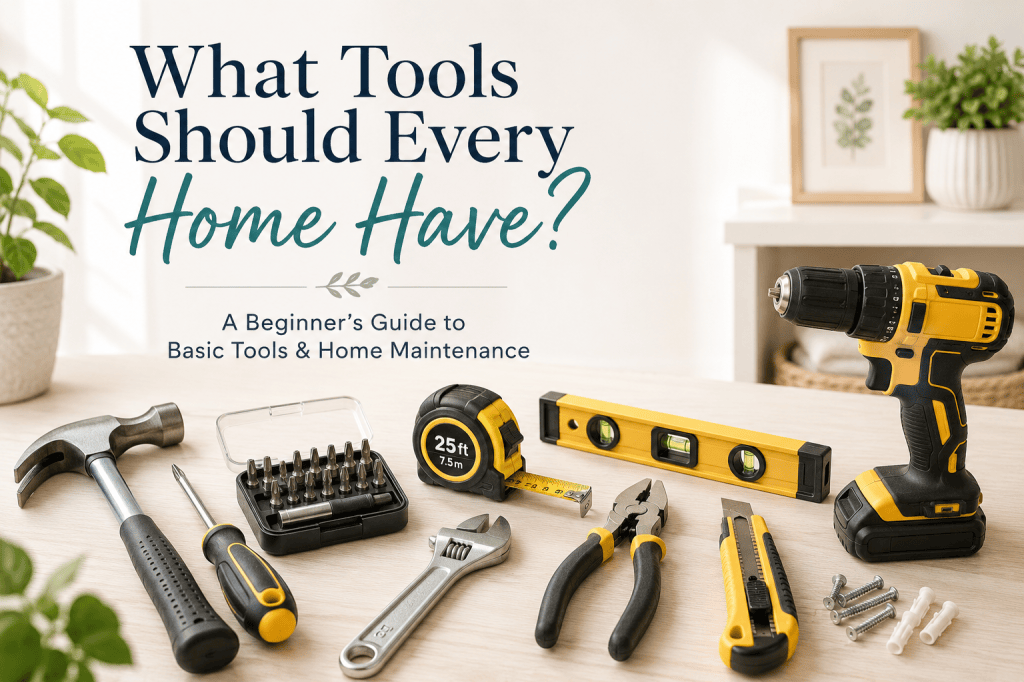
Maybe someone else has always handled the toolbox in your home.
A parent fixed things. A partner handled repairs. A landlord sent maintenance. Or maybe nobody ever taught you what all those tools were for in the first place.
Then life changes, and suddenly you are the person staring at a loose cabinet hinge, a crooked picture frame, a wobbly chair or a box of furniture wondering:
What tool am I even supposed to use for this?
You do not need to become a contractor.
You do not need a garage filled with expensive equipment.
And you definitely do not need one of those enormous 300-piece tool kits where you recognize six things and spend the next fifteen years wondering what the rest are for.
You need a small collection of useful tools, a basic understanding of what they do, and enough confidence to handle the ordinary little jobs that come with having a home.
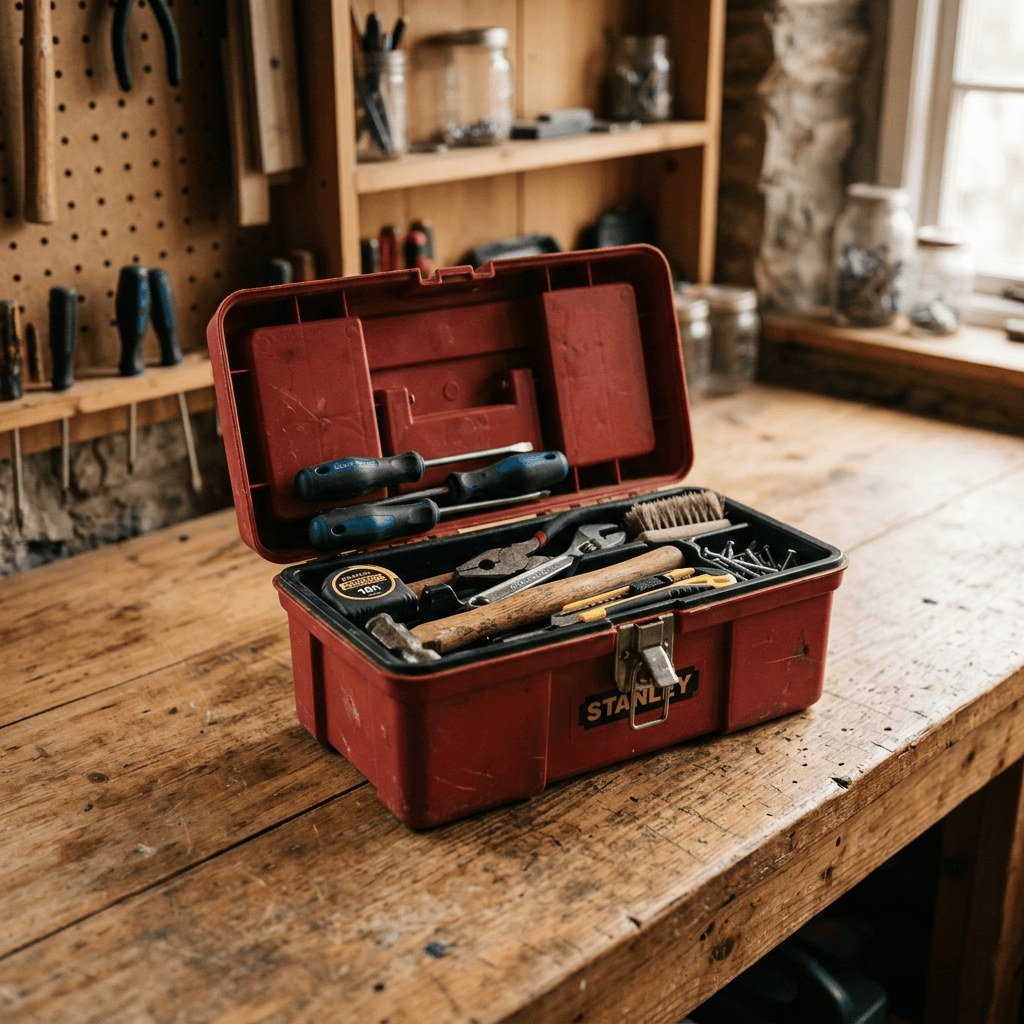
The Basic Tools Almost Everyone Should Have
Start small.
These are the tools you are most likely to reach for again and again.
Hammer
A basic claw hammer handles most ordinary household jobs.
Use the flat end for driving nails.
The curved claw on the back can pull nails back out.
You may use it for:
- Hanging pictures
- Small furniture repairs
- Removing old nails
- Light household projects
You do not need the heaviest hammer in the hardware store.
A comfortable general-purpose hammer is much easier to control.
Phillips Screwdriver
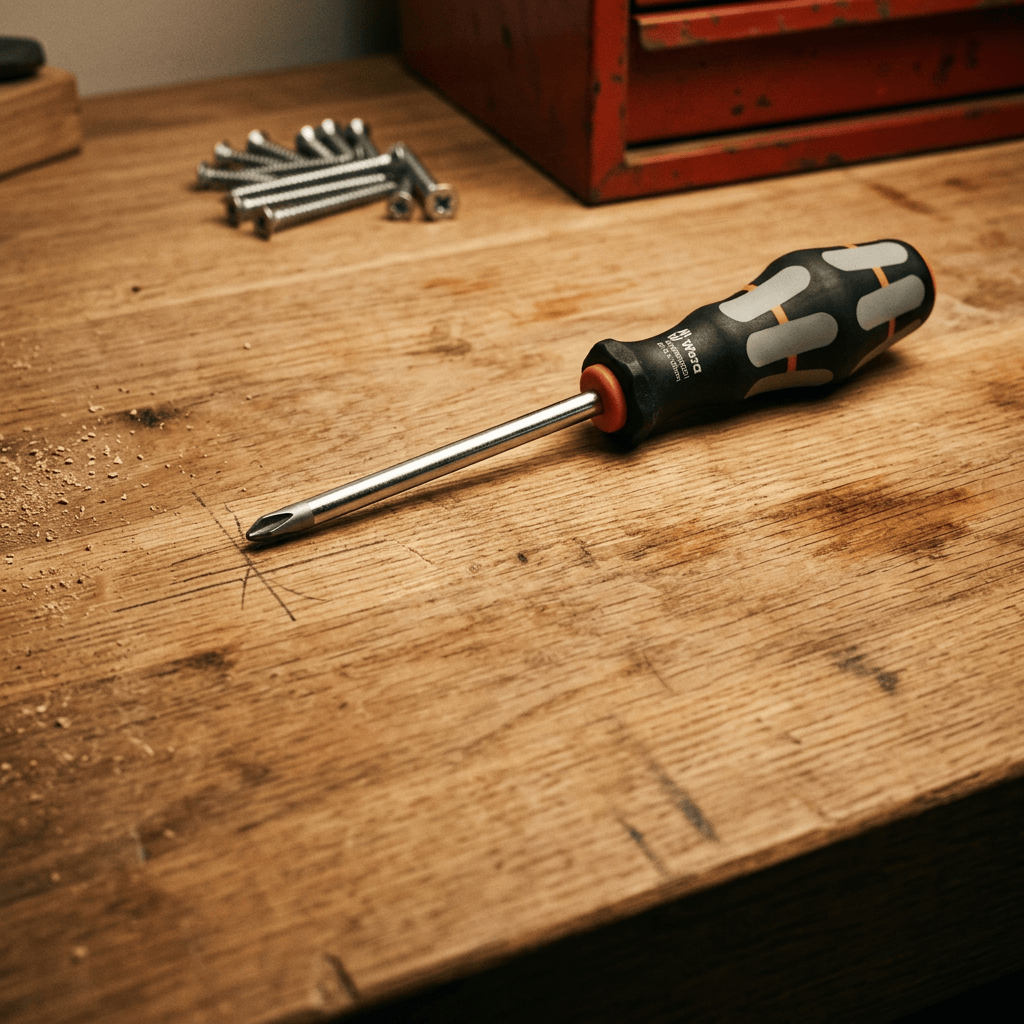
A Phillips screwdriver fits screws with a cross-shaped or plus-sign-shaped opening on top.
You will see these everywhere:
- Cabinet hardware
- Furniture
- Electronics
- Door hardware
- Toys
- Shelving
Choose a screwdriver that fits the screw snugly.
If the tip is too small, it can slip around inside the screw and damage the head.
Flathead Screwdriver
A flathead screwdriver has one straight blade and fits screws with a single straight slot.
Flathead screws are less common in newer furniture, but the screwdriver itself still comes in handy surprisingly often.
Just remember that a screwdriver is not automatically a pry bar, chisel or can opener simply because it happens to fit.
A Multi-Bit Screwdriver Is a Fantastic Shortcut
If you are starting from nothing, a good multi-bit screwdriver can replace an entire handful of individual screwdrivers.
The handle stays the same while you swap the tip.
A useful set may include:
- Several Phillips sizes
- Flathead sizes
- Torx bits
- Hex bits
This is especially handy for assembling furniture and dealing with all the mysterious screws manufacturers like to invent.
Tape Measure
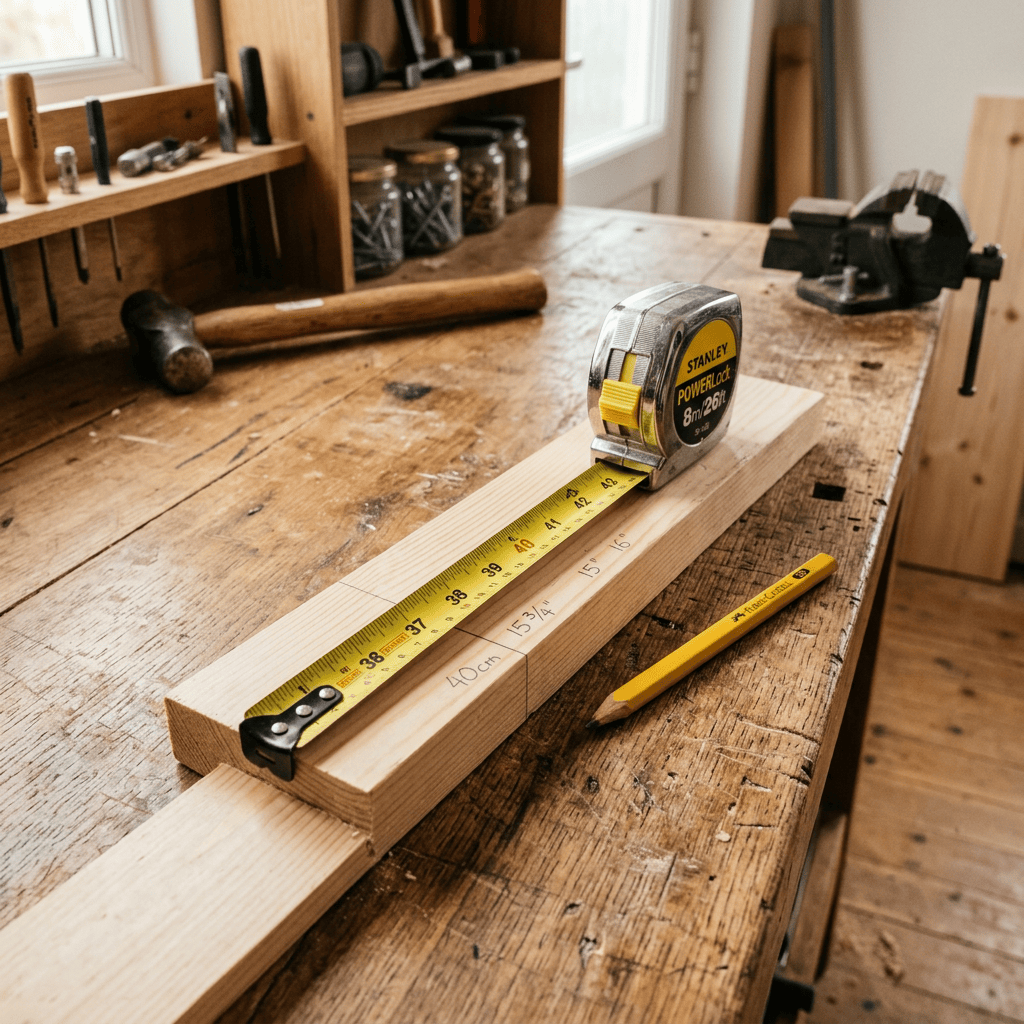
Buy a tape measure.
You will use it much more often than you think.
Measure:
- Furniture before buying it
- Walls before hanging art
- Windows before ordering curtains
- Doorways before attempting to move furniture through them
- Shelves
- Rugs
- Appliances
- Storage spaces
And here is one of those little things nobody tells you:
The metal hook at the end of many tape measures is supposed to move slightly.
That movement helps compensate for whether you are measuring from an outside edge or pushing the hook against an inside surface.
It is not necessarily broken.
Level
A level tells you whether something is actually straight.
Because standing six feet away, squinting and saying:
“I think that’s good?”
is not quite the precision instrument we would like it to be.
Levels are useful for:
- Pictures
- Shelves
- Curtain rods
- Mirrors
- Furniture
- Wall-mounted storage
Small levels are inexpensive and perfectly adequate for most everyday household projects.
Adjustable Wrench
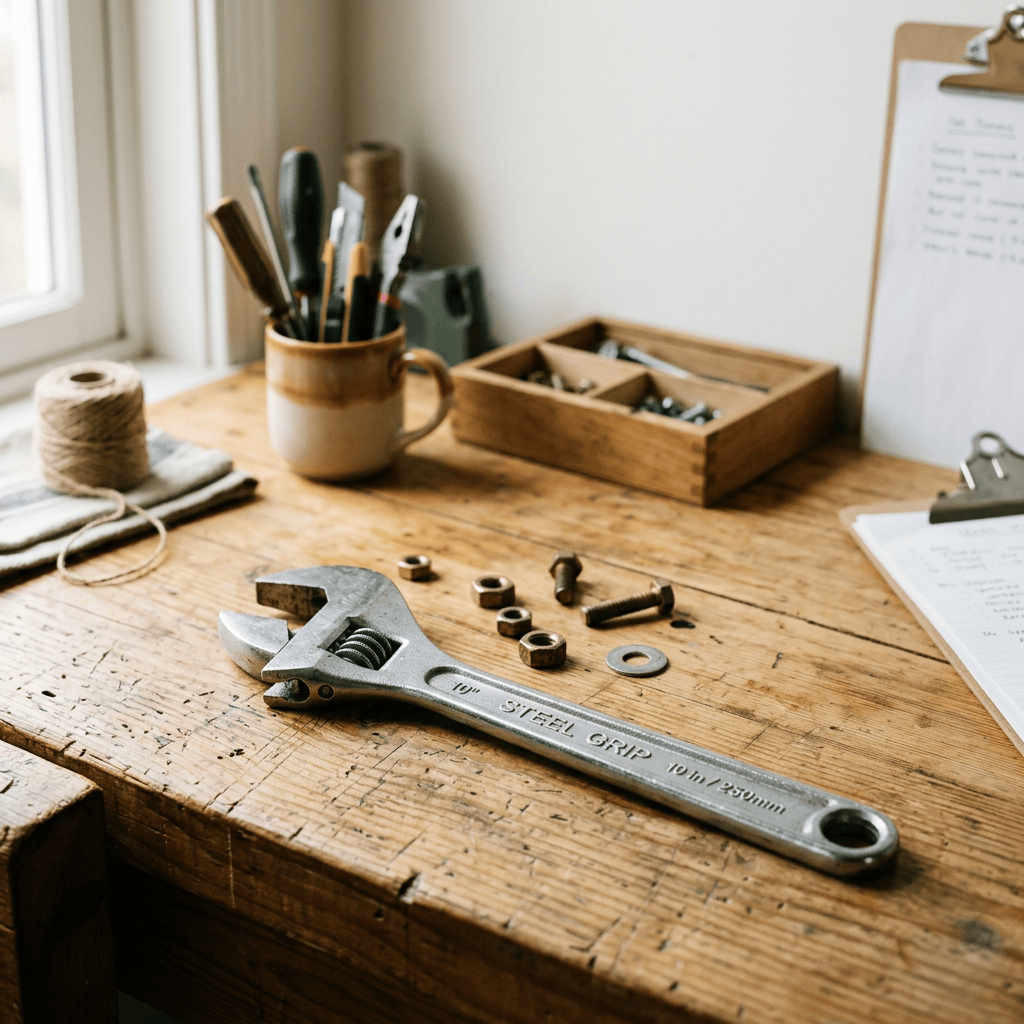
An adjustable wrench has jaws that open and close so one wrench can fit several sizes of nuts and bolts.
Turn the small wheel until the jaws fit snugly around the fastener.
Do not leave a lot of empty space around it.
A loose wrench is much more likely to slip and damage the corners of the nut.
This is useful for:
- Furniture
- Minor plumbing hardware
- Bolts
- Appliance connections
- General tightening jobs
Pliers
Pliers help you grip things that are difficult to hold with your fingers.
A basic pair can help with:
- Holding small objects
- Pulling
- Bending
- Gripping
- Turning stubborn pieces
Needle-Nose Pliers
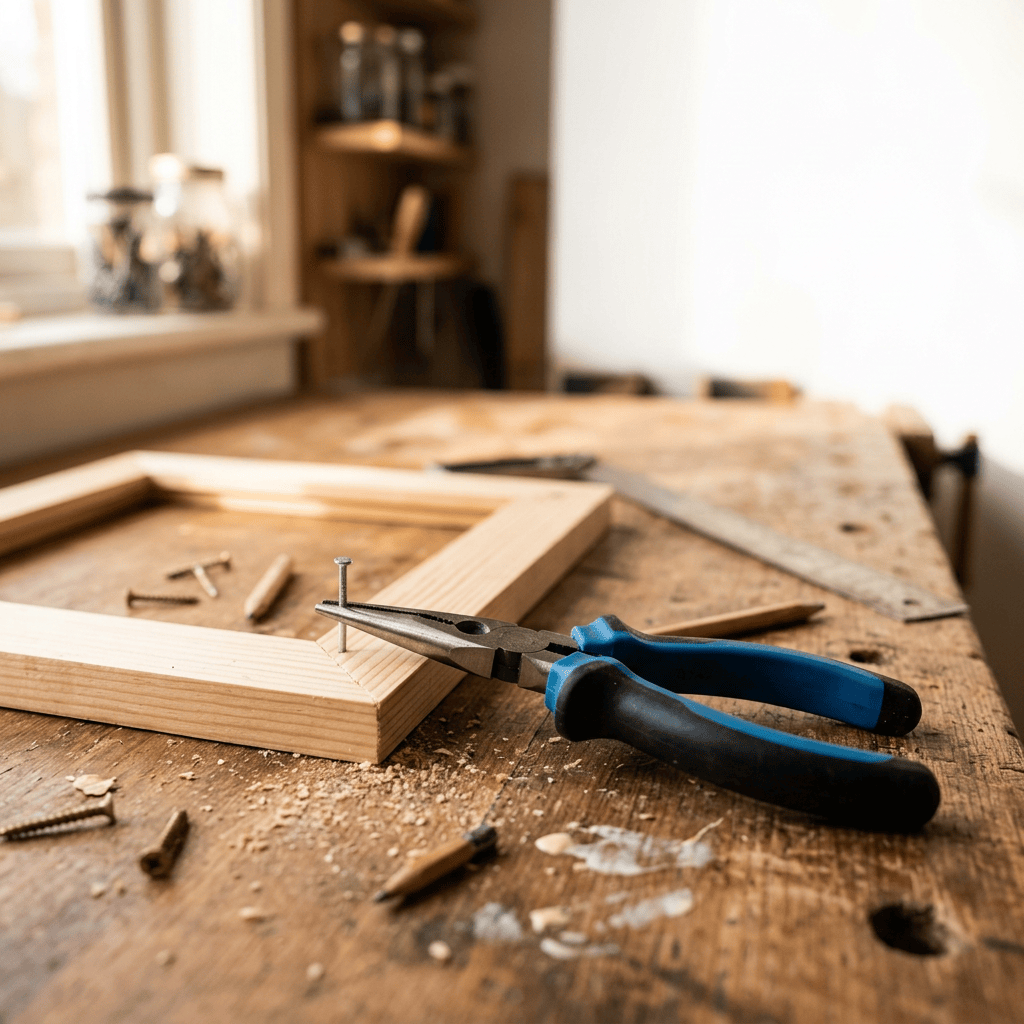
These have long, narrow tips that can reach into tighter spaces.
They are especially useful when you need to grab something small or work somewhere your fingers simply do not fit.
Utility Knife
A utility knife is much better than sacrificing your kitchen scissors every time a delivery arrives.
Use it for:
- Opening boxes
- Cutting cardboard
- Trimming materials
- Cutting tape
- Small household projects
Retract the blade when you are finished.
And cut away from your body, not toward your hand because “it will only take one second.”
One second is plenty of time to regret that decision.
Flashlight or Headlamp
Your phone has a flashlight.
That does not mean your phone should be your only flashlight.
Keep a real one in the house.
A headlamp is particularly useful because it leaves both hands free while you are:
- Looking under a sink
- Checking behind an appliance
- Working during a power outage
- Trying to see inside a dark cabinet
- Fixing something in an awkward place
Keep spare batteries nearby or choose a rechargeable model.
A Small Step Stool
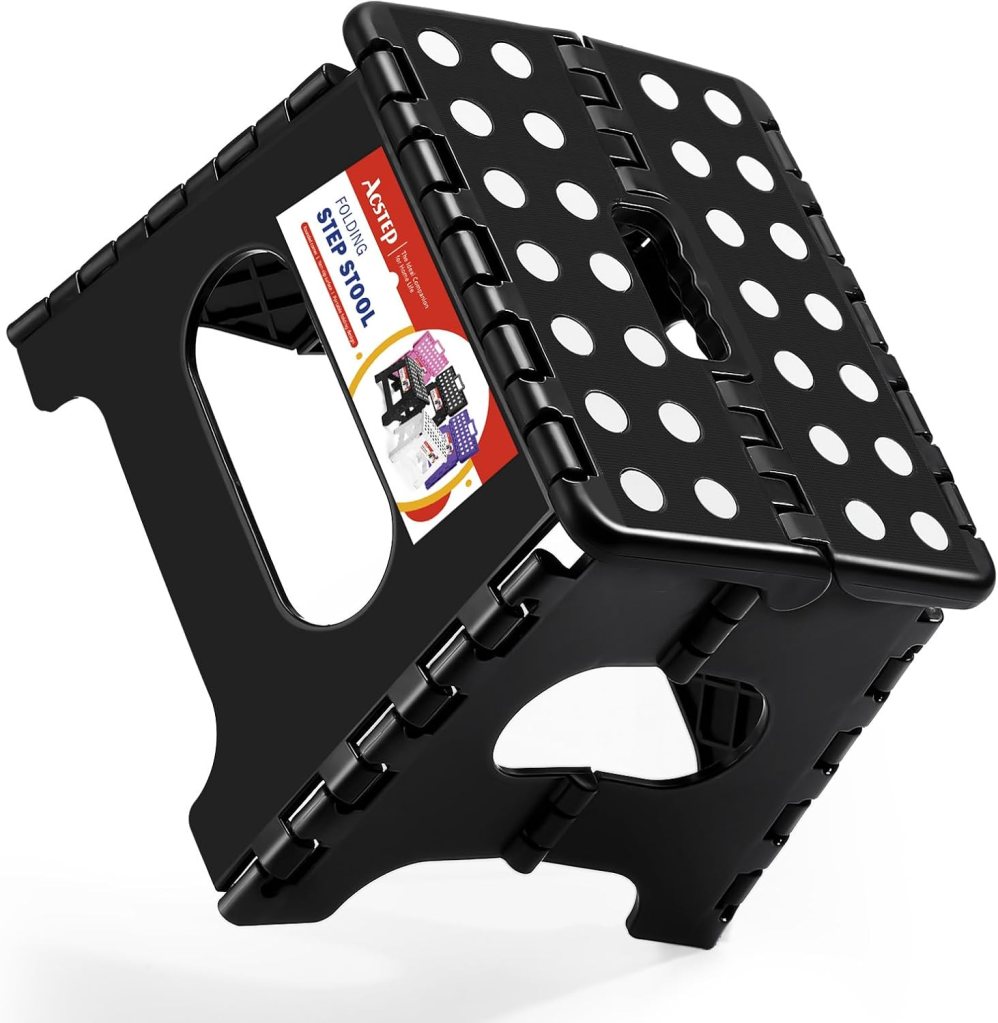
Standing on a rolling office chair is not a household maintenance technique.
Neither is balancing on the edge of the kitchen counter.
Get a sturdy step stool.
Use it for:
- Changing filters
- Reaching upper cabinets
- Hanging things
- Changing light bulbs
- Cleaning high areas
- Reaching storage
Choose one with a stable base and enough height to do the jobs you commonly need.
The Power Tool That Makes a Huge Difference
You can do a surprising amount with hand tools.
But eventually there is one power tool that makes ordinary household projects dramatically easier.
Cordless Drill/Driver
A cordless drill/driver can:
- Drill holes
- Drive screws
- Remove screws
- Assemble furniture
- Install shelves
- Hang curtain rods
- Make pilot holes
- Handle countless small projects
If you have ever assembled furniture using the tiny Allen key included in the box and wondered why your hand no longer wanted to participate in life afterward, you already understand the appeal.
You do not need a huge professional contractor model for basic household use.
A smaller cordless drill is often lighter, easier for a beginner to control and powerful enough for ordinary jobs.
Drill Bits and Driver Bits Are Different
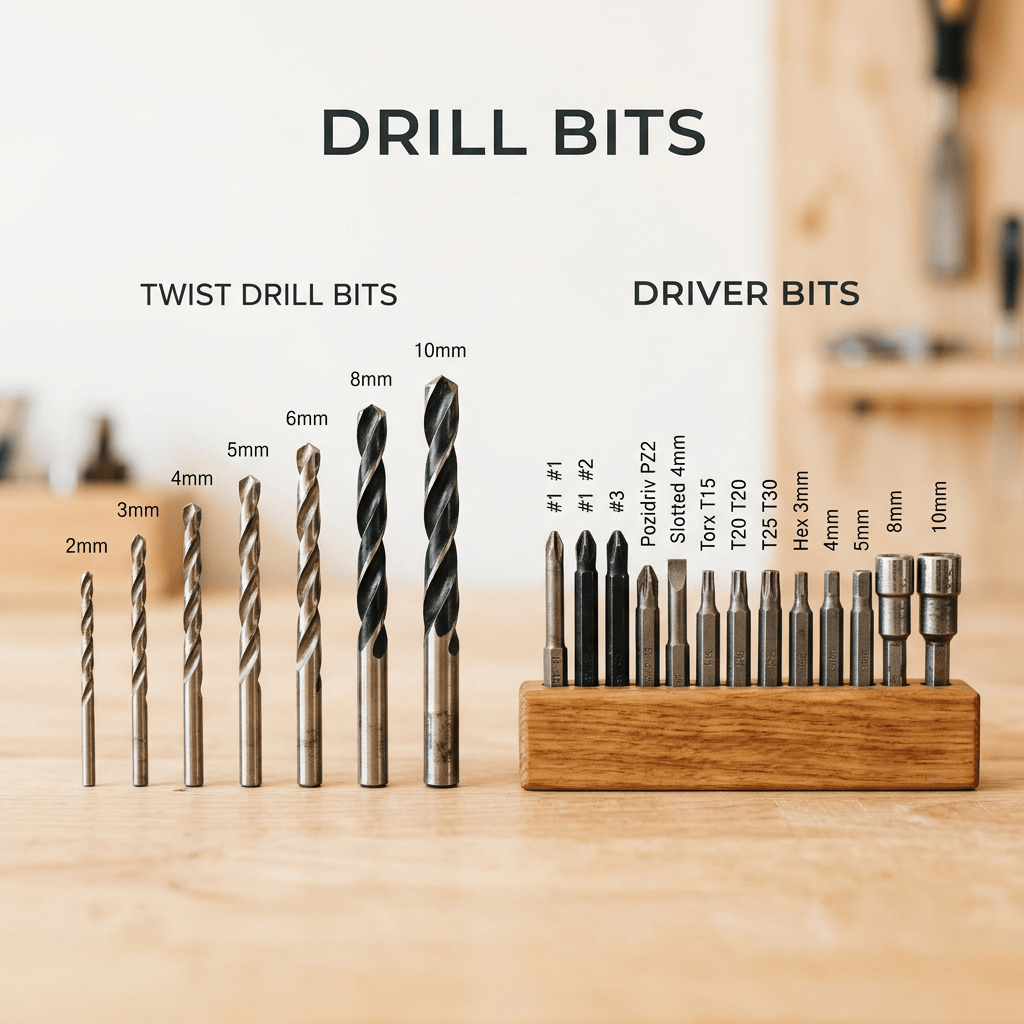
This trips beginners up all the time.
Drill bits make holes.
Driver bits turn screws and other fasteners.
Your drill can usually use both.
A small starter set is enough until a project gives you a reason to buy something more specialized.
Start Slowly
A drill has considerably more power than your wrist.
Start at a slower speed until you understand how the tool responds.
When driving a screw, stop once it is secure.
More power does not automatically mean more secure.
It can also mean:
Congratulations, you just buried the screw halfway through the furniture.
A Stud Finder Can Save You a Lot of Guessing
Walls are not solid all the way across.
Behind drywall are structural framing members called studs.
When hanging heavier objects, finding a stud can give you a much stronger mounting point.
A stud finder helps locate them without requiring you to knock all over the wall and decide whether one spot sounds vaguely more “solid” than another.
Use one for projects such as:
- Heavier shelves
- Large mirrors
- Wall-mounted storage
- Some television mounts
- Heavier decorative pieces
Not everything needs to go into a stud, though.
That brings us to wall anchors.
What Are Those Little Plastic Wall Anchors?
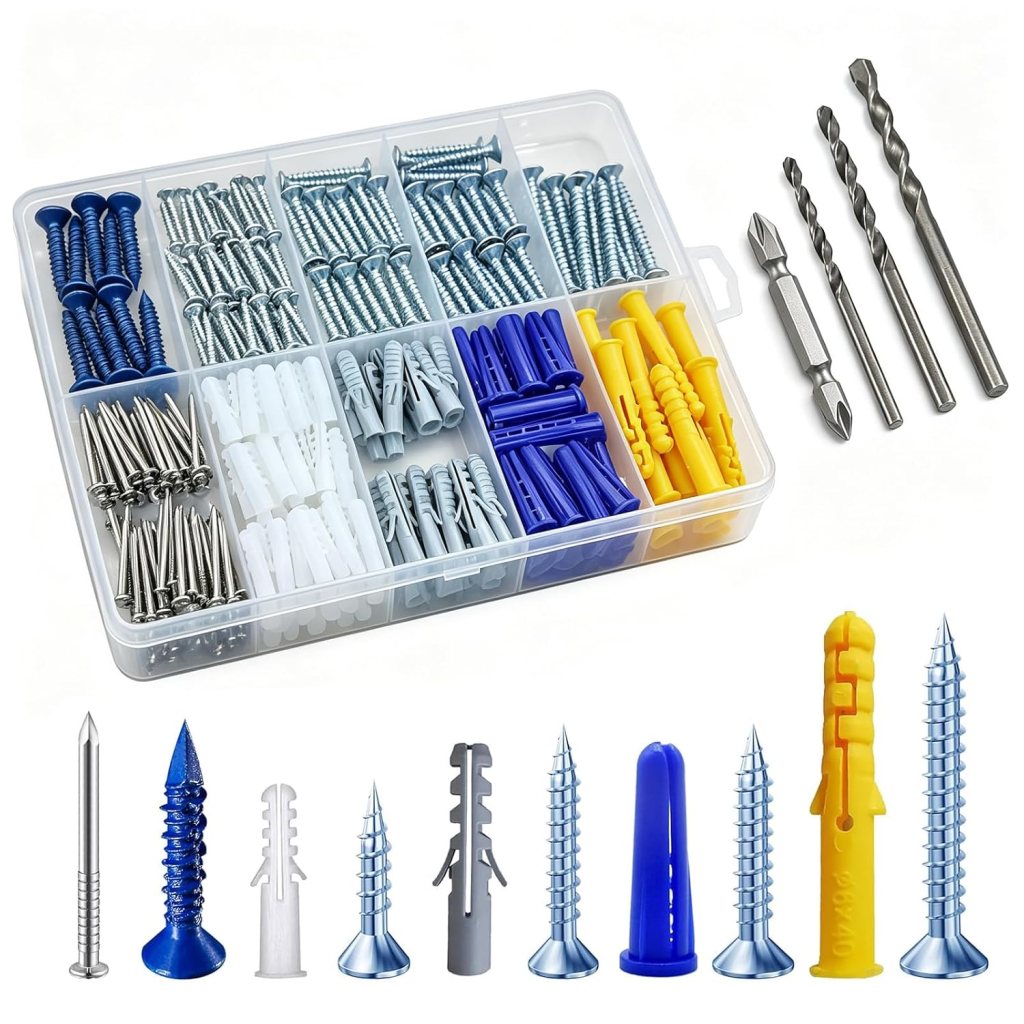
You have probably seen them.
Small plastic pieces arrive with a shelf, rack or wall accessory and nobody explains what they actually do.
A wall anchor gives a screw something more secure to grip when you are fastening something into drywall rather than directly into a stud.
Different anchors are designed to hold different amounts of weight.
Do not assume every little plastic anchor is appropriate for every object.
A lightweight picture and a heavy floating shelf are very different jobs.
Always match the anchor to:
- Your wall material
- The screw
- The weight being supported
We can go much deeper into wall anchors in another guide because they deserve one.
Keep a Small Supply of Household Hardware
Once you have the tools, keep a small organizer with useful odds and ends.
You may want:
- Common screws
- Small nails
- Picture hooks
- Appropriate wall anchors
- Washers
- Nuts and bolts
- Felt furniture pads
- Zip ties
- Command-style removable hooks or strips
- Spare batteries
You do not need forty-seven versions of every screw ever manufactured.
Start with the basics and add things as projects come up.
Eventually your hardware collection will mysteriously reproduce on its own like everyone else’s.
Work Gloves and Safety Glasses Are Worth Having
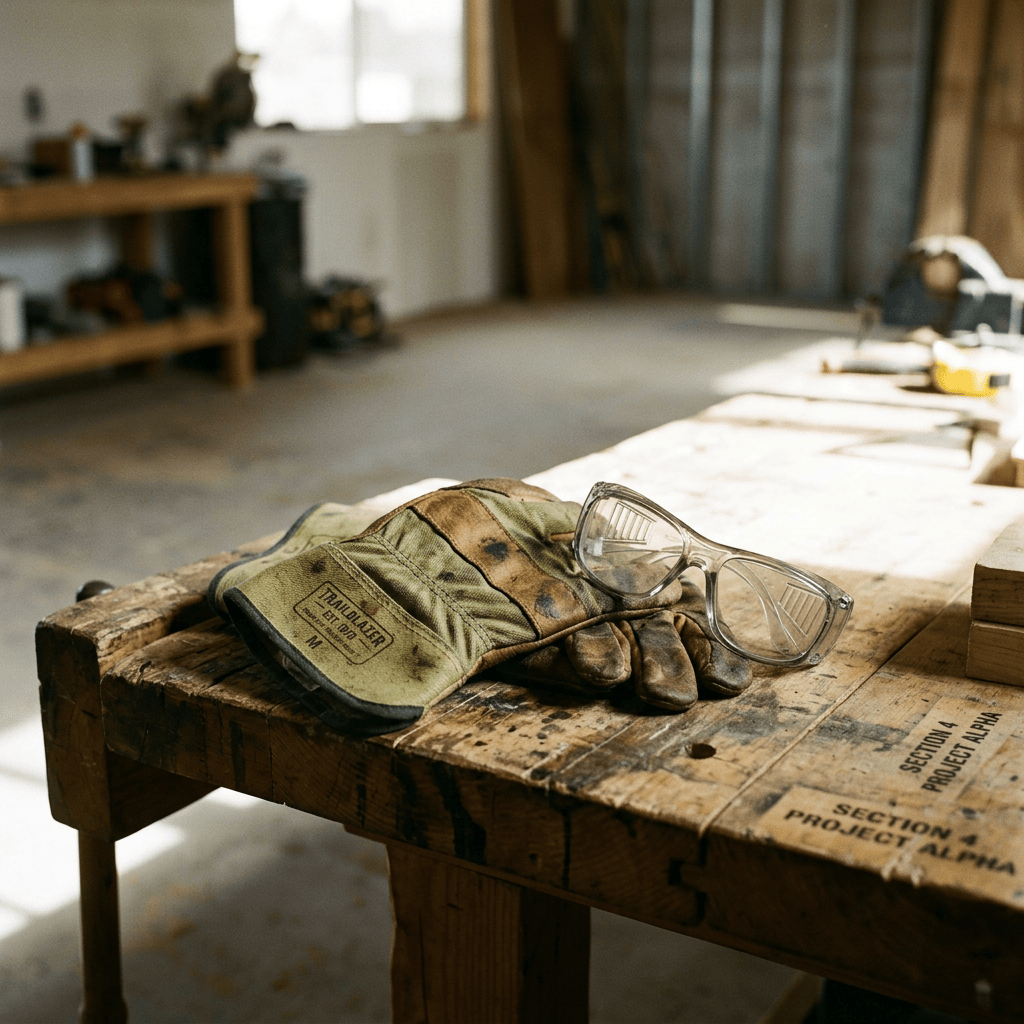
Safety equipment is not only for major construction sites.
Work Gloves
A basic pair can protect your hands while:
- Moving rough materials
- Handling lumber
- Gardening
- Moving furniture
- Working around sharp edges
- Cleaning up debris
Safety Glasses
Wear eye protection when there is a reasonable possibility that something could fly toward your face.
That includes jobs involving:
- Drilling
- Cutting
- Hammering
- Sanding
- Debris
Your eyes are considerably more expensive than a pair of safety glasses.
Learn These Small Household Jobs
Owning tools becomes much more useful when you start recognizing the simple jobs you can reasonably learn yourself.
Tighten Loose Hardware
Before replacing something because it feels broken, check whether it is simply loose.
Look at:
- Cabinet knobs
- Drawer pulls
- Door handles
- Chair legs
- Furniture screws
- Towel bars
- Hinges
Sometimes the entire repair is:
Find the correct screwdriver and tighten the screw.
That is exactly the kind of job you do not need to pay someone else to do.
Hang Pictures Properly
Learn:
- How heavy the object is
- What type of wall you have
- Whether you need a nail, picture hook, anchor or stud
- How to measure the placement
- How to use a level
Taking five minutes to plan the hole is much easier than making seven holes and deciding the sixth one was probably fine.
Assemble Furniture
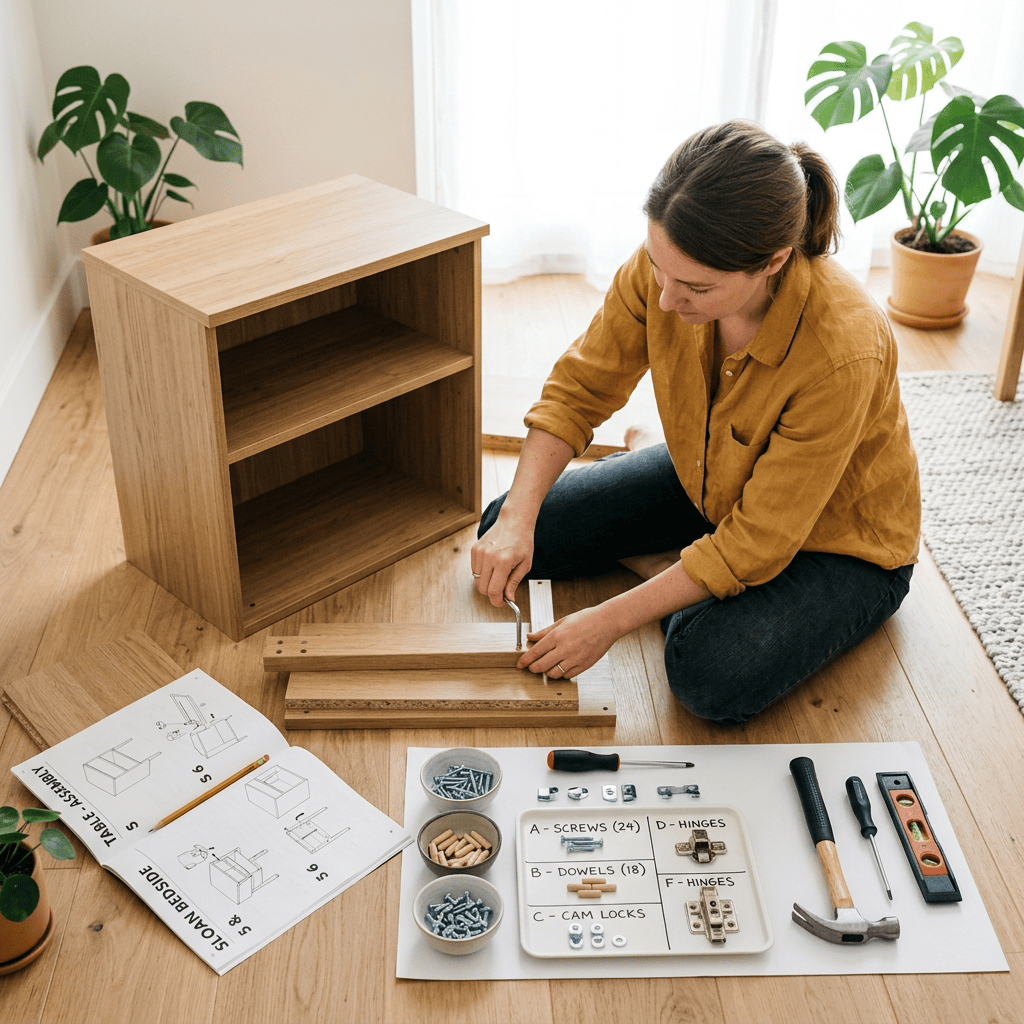
Flat-pack furniture is an excellent place to build basic tool confidence.
Before starting:
- Read the instructions.
- Lay out the hardware.
- Identify the tools you need.
- Keep screws grouped by size.
- Do not fully tighten everything immediately unless the instructions tell you to.
Many pieces need a little movement during assembly so the holes can line up.
Tighten everything securely once the structure is correctly aligned.
Change Household Filters
Filters are ordinary maintenance, not a major repair.
Depending on your home, you may have filters in:
- HVAC systems
- Range hoods
- Air purifiers
- Vacuums
- Refrigerators
- Dehumidifiers
Learn where yours are and what replacement size or model they use.
A photo of the label stored on your phone can save you from standing in a store wondering which of twenty nearly identical filters belongs in your house.
Learn Where Your Shutoffs and Breaker Panel Are
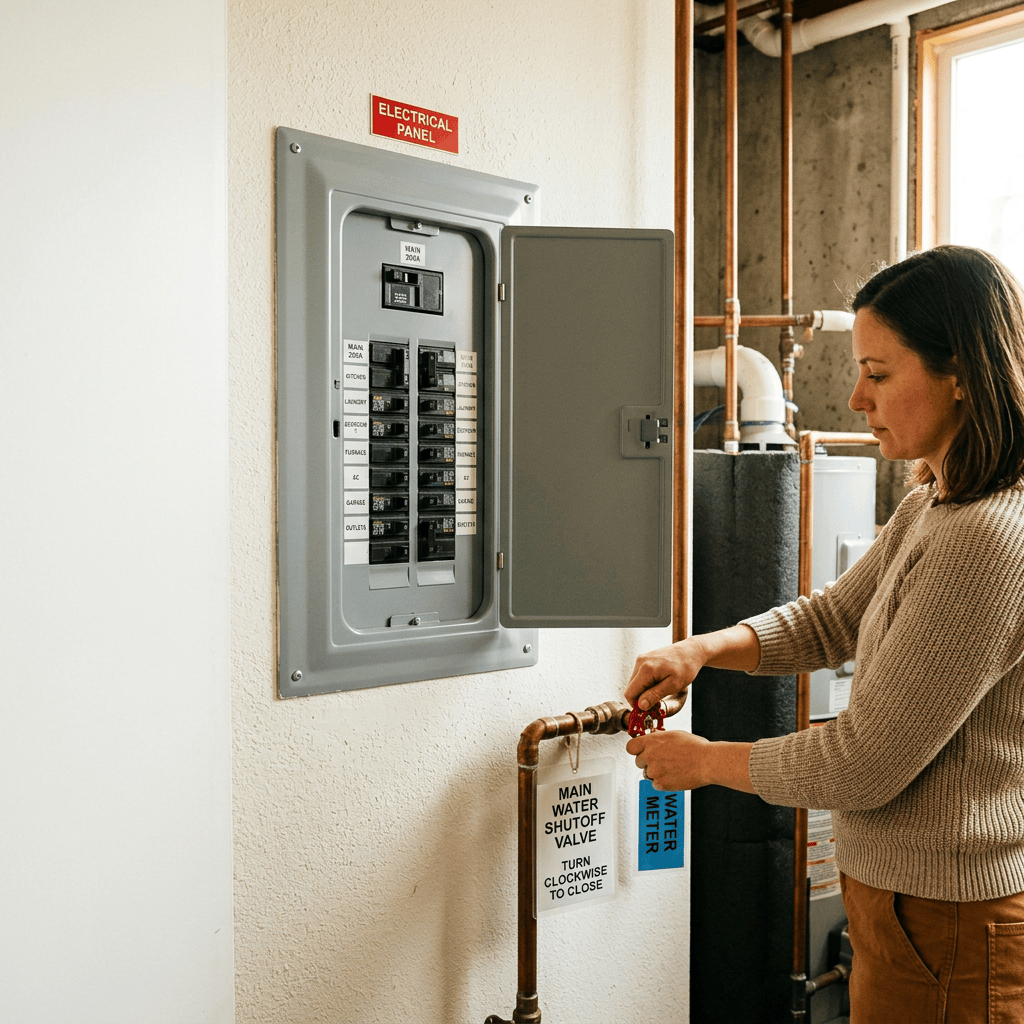
You do not need to become an electrician or plumber.
You do need to know where important household controls are before something goes wrong.
Know where to find:
- Your electrical breaker panel
- Main water shutoff if accessible
- Toilet shutoff valves
- Sink shutoff valves
A stressful situation is not the ideal moment to begin searching the house for them.
Know When Not to DIY
Household independence does not mean refusing to hire professionals.
Part of knowing your home is recognizing when a job is outside your skill level.
Stop and get qualified help for work involving things such as:
- Gas lines or suspected gas leaks
- Major electrical work
- Serious plumbing problems
- Structural damage
- Roofing work you cannot do safely
- Major water intrusion
- Anything requiring permits or specialized knowledge
- Anything you simply do not feel safe doing
There is an enormous middle ground between:
“I call a professional every time a screw loosens.”
and
“I watched six minutes of videos, so apparently I am rewiring the house now.”
Live comfortably in that middle ground.
Do Not Buy Every Tool Before You Need It
A beginner tool kit should grow with you.
Start with:
- Hammer
- Screwdrivers or multi-bit screwdriver
- Tape measure
- Level
- Adjustable wrench
- Pliers
- Utility knife
- Flashlight or headlamp
- Step stool
- Safety glasses
- Work gloves
Then consider adding:
After that?
Buy tools because a real project gives you a reason to own them.
If you eventually start doing plumbing projects, buy plumbing tools.
If you get into woodworking, buy woodworking tools.
If you discover you genuinely enjoy home improvement and suddenly own three drills and have opinions about saw blades, congratulations.
You have crossed into entirely different territory.
Store Your Tools Together
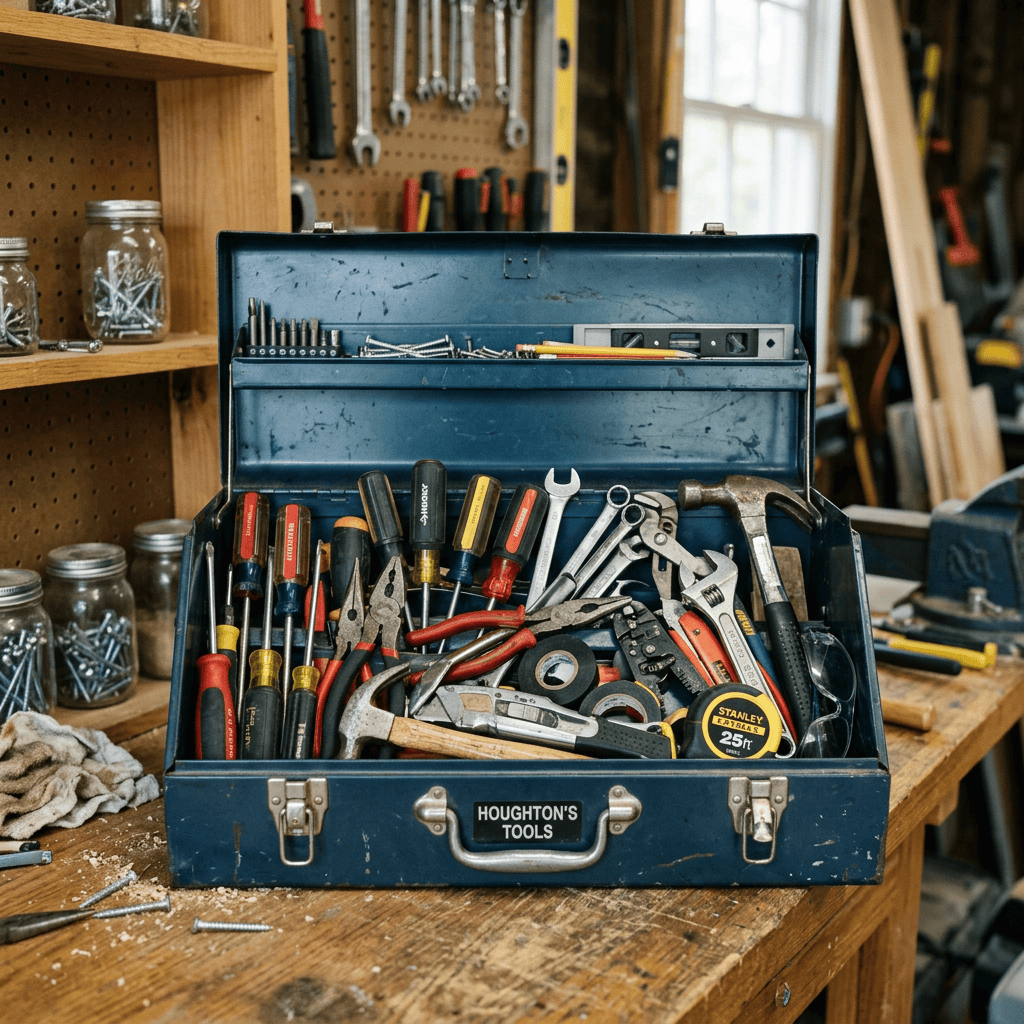
This sounds obvious.
It is apparently not.
Choose one home for the tools.
That might be:
Keep the commonly used tools together.
Put hardware into labeled compartments.
Return tools when you finish using them.
Because having a screwdriver technically somewhere in the house is not especially useful when you need it and have no idea whether it is in the kitchen junk drawer, garage, laundry room or the mysterious drawer everyone is afraid to open.
Take a Photo Before Taking Something Apart
This is one of the simplest household repair tricks.
Before removing:
- Wires you are safely permitted to handle
- Hardware
- Hinges
- Furniture pieces
- Filters
- Hose connections
- Multiple screws or brackets
Take a photo.
If you forget which direction something faced or where a particular piece belonged, you have a reference.
You can also place screws and small parts into a cup, bowl or zippered bag while you work so they do not disappear.
Tiny screws possess an astonishing ability to teleport the moment they touch the floor.
Keep Manuals and Model Numbers Somewhere Useful
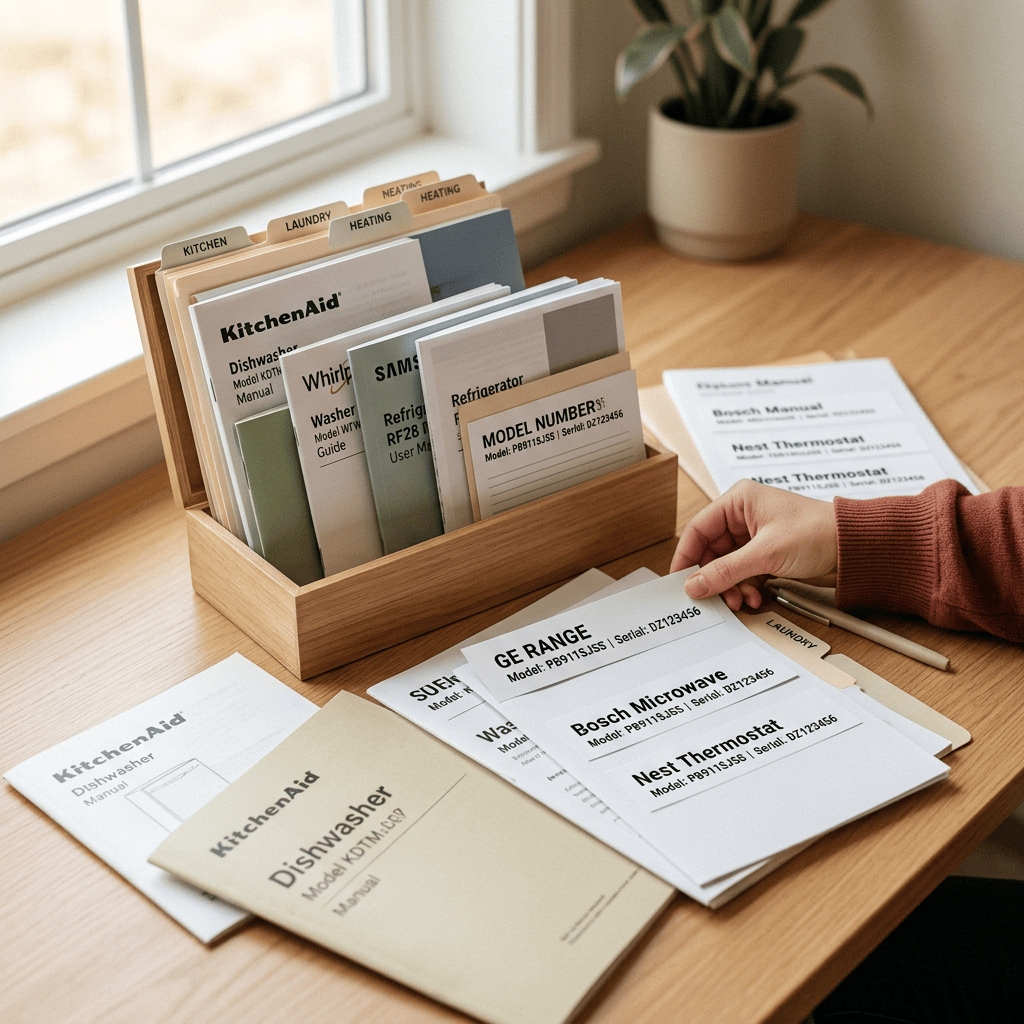
You do not necessarily need a drawer overflowing with paper manuals.
But you should know the make and model of important things in your home.
Take photos of labels for things such as:
- Appliances
- HVAC equipment
- Filters
- Fixtures
- Electronics
- Power tools
That makes replacement parts, filters and troubleshooting much easier later.
Start With One Small Repair
If tools feel intimidating because nobody ever taught you how to use them, do not begin with a giant project.
Start with something ordinary.
Tighten a loose drawer pull.
Hang a picture.
Assemble a shelf.
Replace a filter.
Fix a crooked cabinet door.
Learn how your drill works.
Every small job teaches you something.
Eventually you stop looking at ordinary household problems as mysterious things that require somebody else to rescue you.
You start looking at them and thinking:
Okay. What is actually wrong, and what tool fixes it?
That is the skill we are building.
Final Thoughts
Nobody is born knowing what a wrench does.
Nobody emerges into adulthood instinctively understanding drill bits, wall anchors and studs.
Some people were taught.
Some people watched someone else do it.
Some people learned because something broke and they had no choice.
And some people are learning now.
That is perfectly fine.
Build a small tool kit.
Learn what each tool actually does.
Take on the simple jobs.
Ask questions when you do not understand something.
And know when a project genuinely needs somebody with more training.
You do not need to fix everything yourself.
But knowing how to handle the little things can save money, save time and make your home feel considerably less intimidating.
The goal is not becoming a professional handyman.
The goal is knowing enough about your own home that a loose screw does not require an emergency phone call.
 Life Tips With Love ♥