

Moving into college is exciting until you realize nobody ever explained how much detergent to use, why your clothes suddenly smell strange, what belongs in the dryer, or how one red shirt managed to turn an entire load pink.
Laundry is not difficult once you know the small rules. This guide covers the products worth having, the steps that prevent ruined clothes, and the practical tricks people often learn only after something goes wrong.
The Simple College Laundry System
You do not need to carry six bottles and a hard plastic basket across campus. A good system should fit together, stay organized, and be easy to take to a shared laundry room.

Start With a Backpack Laundry Bag
A large backpack-style laundry hamper is much easier to carry through hallways, down stairs, or across a residence hall than an open basket. It can hang behind the dorm-room door during the week, then close and go directly onto your back on laundry day.
Look for:
- Wide, adjustable shoulder straps
- A secure drawstring or buckle closure
- A front pocket for laundry supplies
- Reinforced seams
- Enough room for bedding, towels, and a full load
Keep your detergent, stain treatment, dryer sheets, the mesh bag, and other small supplies in the front pocket. Store wool dryer balls and bulkier items inside the main compartment so the entire laundry system stays together.
What Each Laundry Product Actually Does
You do not need to use every product in every load.
Detergent
Detergent removes ordinary dirt, sweat, body oils, and odors. Follow the package directions rather than assuming more is better. Excess detergent can leave residue behind and make clothes feel stiff, dull, or strangely coated.
Choose a detergent that:
- Works in cold water
- Fits easily in your laundry bag
- Does not leak
- Cleans effectively without leaving an overwhelming fragrance
- Works for your skin sensitivities
Stain Pretreatment
Pretreatment is for visible stains before the clothing enters the washer. Apply it as soon as possible and follow the product directions.
Emergency Stain Wipes
Keep stain-removing wipes in your backpack, purse, car, and dorm room. They can help prevent a dining-hall spill from sitting on your clothes for the rest of the day.
They are especially useful for:
- Mustard
- Coffee
- Hot chocolate
- Tomato sauce
- Grease
- Makeup
- Brightly colored drinks
Oxygen Cleaner
An oxygen-based cleaner is useful for dingy whites, stubborn stains, and white shirts or towels that have yellowed over time.
It may require soaking and extra effort, but it can revive whites that look permanently ruined.
Fabric Softener
Fabric softener can make some clothing feel softer and add fragrance, but it is optional. Avoid using it automatically on every load. It can reduce the absorbency of towels and may not suit everyone’s skin.
Scent Beads
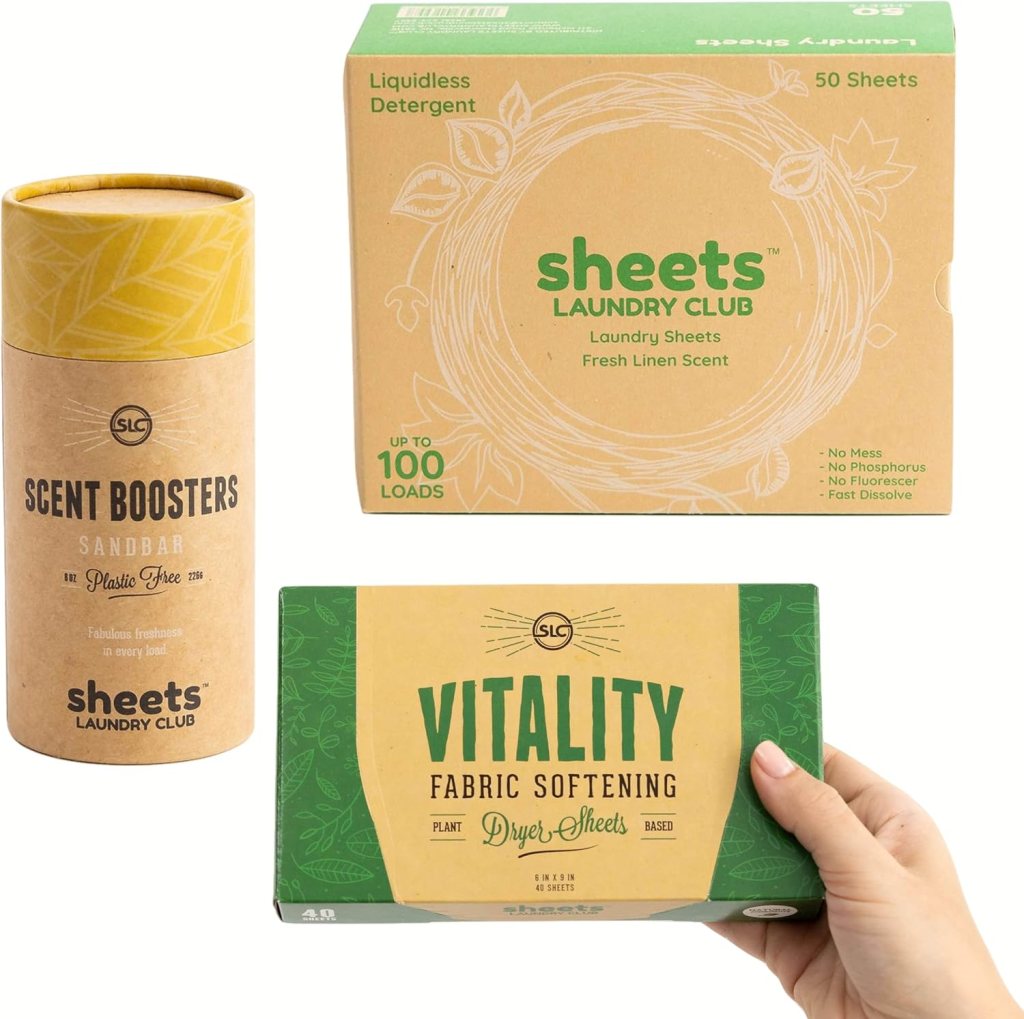
Scent beads add fragrance but do not clean clothing. Use them only when you enjoy the scent and your skin tolerates them. If you love things that smell good, they may become your favorite part of the system. If you are sensitive to fragrance, simply skip them.
Wool Dryer Balls
Wool dryer balls help separate clothing as it tumbles, improve airflow, and may help loads dry more evenly.
Dryer Sheets
Dryer sheets help control static and can add softness or fragrance. In my experience, wool dryer balls and dryer sheets do different jobs, and using both produces better results than relying on either one alone.
Hair Catchers
Reusable hair catchers can help collect pet hair and loose human hair during washing or drying.
Test them with your dryer sheets before relying on the combination. Some dryer sheets stick directly to the sponge type catchers, preventing both products from moving freely and making both less useful.
Mesh Laundry Bags
Zippered mesh bags protect bras, lingerie, delicate underwear, socks, and other small pieces from stretching, tangling, or disappearing.
The Basic Rule: Wash Almost Everything in Cold Water
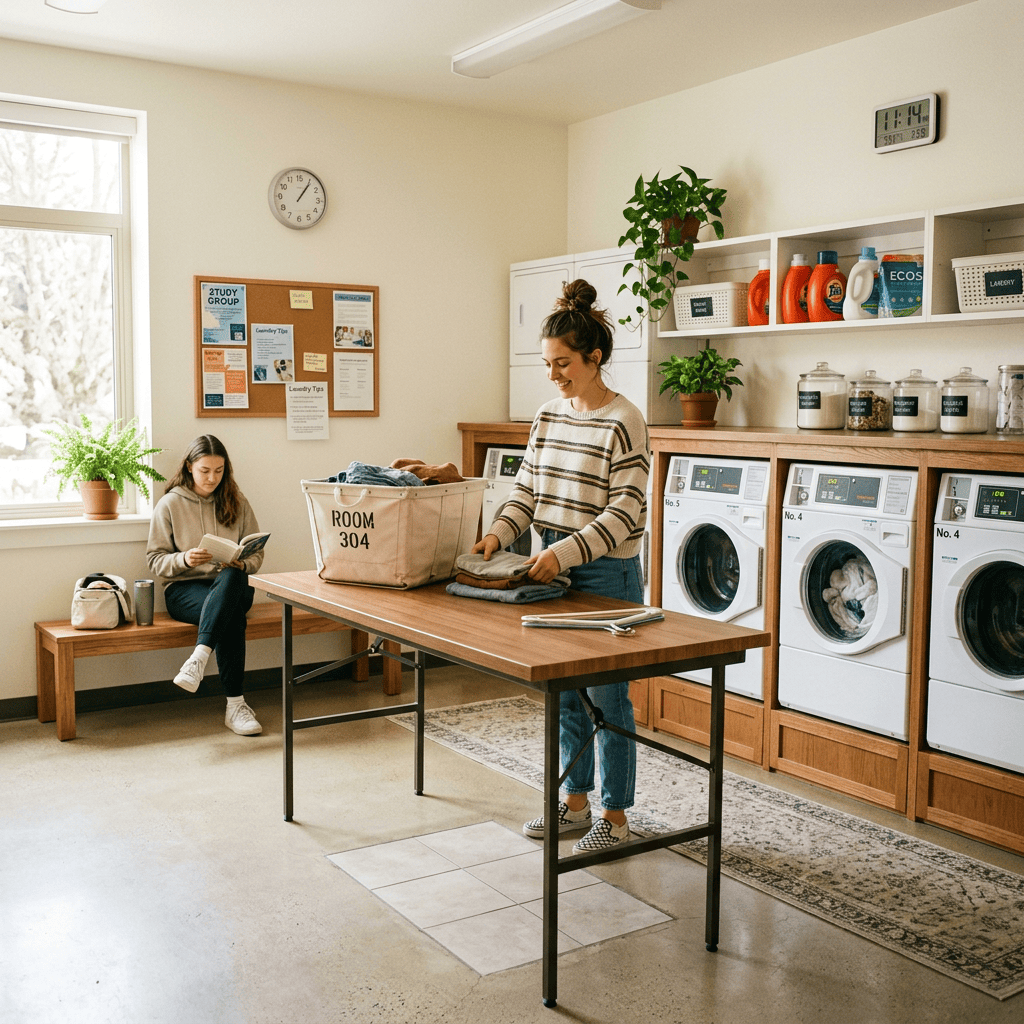
Cold water works well for nearly all ordinary laundry and should be your default. Only switch to warm or hot water when the care label specifically requires it or when you have a genuine sanitation need.
Cold water helps:
- Reduce shrinking
- Protect elastic
- Slow fading
- Lower the risk of dye transfer
- Protect delicate fabrics
- Simplify mixed loads
Hot water is mainly useful when there is a genuine sanitation need and the fabric can safely tolerate it.
Test-Wash New Bright Clothing
New reds, blues, purples, neons, and other strongly colored items can release excess dye during their first wash.
Wash them alone or with similar dark colors the first time. This small step can prevent one new shirt from staining an entire load of clothes or towels.
How to Sort Laundry Without Making It Complicated
You do not need eight tiny piles. Start with a few practical groups.
Everyday Darks and Colors
Wash ordinary dark and colored clothing together in cold water.
Whites and Light Colors
Keep white clothing, pale towels, and light bedding away from new or strongly dyed items.
Towels and Bedding
Towels and sheets are bulky and may need more drying time than regular clothing. Washing them separately also prevents towels from covering smaller clothes and keeping them from washing properly.
Delicates
Use a mesh bag, cold water, and the gentle cycle. Air-dry anything with delicate elastic, lace, underwire, or special shaping.
Heavily Soiled Items
Treat visible stains first and wash heavily soiled clothing separately when appropriate.
How to Use a Shared College Washing Machine
Before loading anything, check the drum for pens, tissues, gum, bleach residue, or anything left behind by the previous person.
Empty pockets, close zippers, treat visible stains, and place machine-safe delicates inside a zippered mesh bag.
Put Each Product in the Right Place
Add these directly to the empty washer drum before the clothes:
Use the labeled dispenser for:
- Liquid or powder detergent
- Fabric softener
- Two drops of doTERRA Lemon essential oil in the bleach compartment when using my lemon-oil method
Do not place pods, detergent sheets, or scent beads in the dispenser unless the package or machine specifically instructs you to.
Add the clothing without packing it so tightly that it cannot move. Choose cold water for ordinary laundry, a normal cycle for everyday clothes, and a gentle cycle for machine-safe delicates.
Start the machine, set a timer, and return before the cycle ends. Move wet clothing promptly so it does not develop sour odors.
How to Dry Your Clothes and Use a Shared College Dryer

Before loading the dryer, separate machine-dry items from anything that needs to air-dry.
Set aside bras, lingerie, delicate panties, sweaters, wool, cashmere, and anything labeled lay flat, hang dry, or do not tumble dry. Lay sweaters and knitwear flat so they keep their shape, and hang lighter delicates where air can circulate.
Before starting the machine:
- Clean the lint screen.
- Check previously stained clothing before applying heat.
- IF visible stain is still present, retreat the stain and rewash.
- Add wool dryer balls and a dryer sheet.
- Add a reusable hair catcher when dealing with pet hair or heavy shedding.
- Make sure the load has enough room to tumble freely.
Choose the lowest effective heat setting. Avoid overdrying, set a timer on your phone, and return before the cycle ends.
Remove clothing promptly, then hang, fold, or smooth pieces before they cool in a crumpled pile.
Stains That Need Fast Attention
Some spills are especially likely to leave permanent marks when ignored.
Treat these as quickly as possible:
- Mustard
- Blood
- Grease and oil
- Tomato sauce
- Hot chocolate and chocolate
- Coffee
- Makeup
- Ink
- Grass
- Red or brightly colored drinks
For blood, start with cold water rather than hot water. Heat can make protein-based stains more difficult to remove.
What College Students Should Know About Washing With Bleach
I generally avoid chlorine bleach unless there is a genuine need to sanitize something. It is easy to misuse, can fade or permanently discolor clothing, weaken fibers and elastic, irritate the skin, eyes, and lungs, and create dangerous fumes if mixed with ammonia, vinegar, acids, or other cleaners.
Bleach can also wear fabrics down faster. Repeated use may leave clothing, towels, and bedding thinner, weaker, or more prone to holes, which means replacing them sooner and spending more money over time.
For routine stains and accidental color transfer, I personally put two drops of doTERRA Lemon essential oil into the washer’s bleach dispenser so the machine can dilute and release it during the cycle. In my experience, it has removed stains and transferred color more successfully than bleach on several loads.
Important: Essential-oil quality and ingredients can vary widely between brands. Some products sold as lemon oil may include added fragrance, carrier oils, or other ingredients that I would not put in a load of clothing. I only use and recommend doTERRA Lemon essential oil for this method because it is the exact product I have personally used successfully. Do not substitute a random fragrance oil or inexpensive lemon-scented product.
For severely yellowed whites, I use an OxiClean soak instead. Chlorine bleach is not an everyday laundry essential and should only be used when there is a real sanitation need, the fabric can safely tolerate it, and the washer instructions are clear.
When Regular Laundry Rules Do Not Apply
Laundry heavily contaminated during a contagious illness is different from ordinary sweat, food stains, or everyday dirt.
Do not casually carry seriously contaminated fabric into a shared laundry room. When an inexpensive item is heavily soiled with potentially infectious bodily waste, securely discarding and replacing it may be the safer and more practical option.
For anything valuable or necessary, follow disease-specific health guidance rather than treating it like an ordinary load.
How to Hand-Wash Bras, Lingerie and Delicates
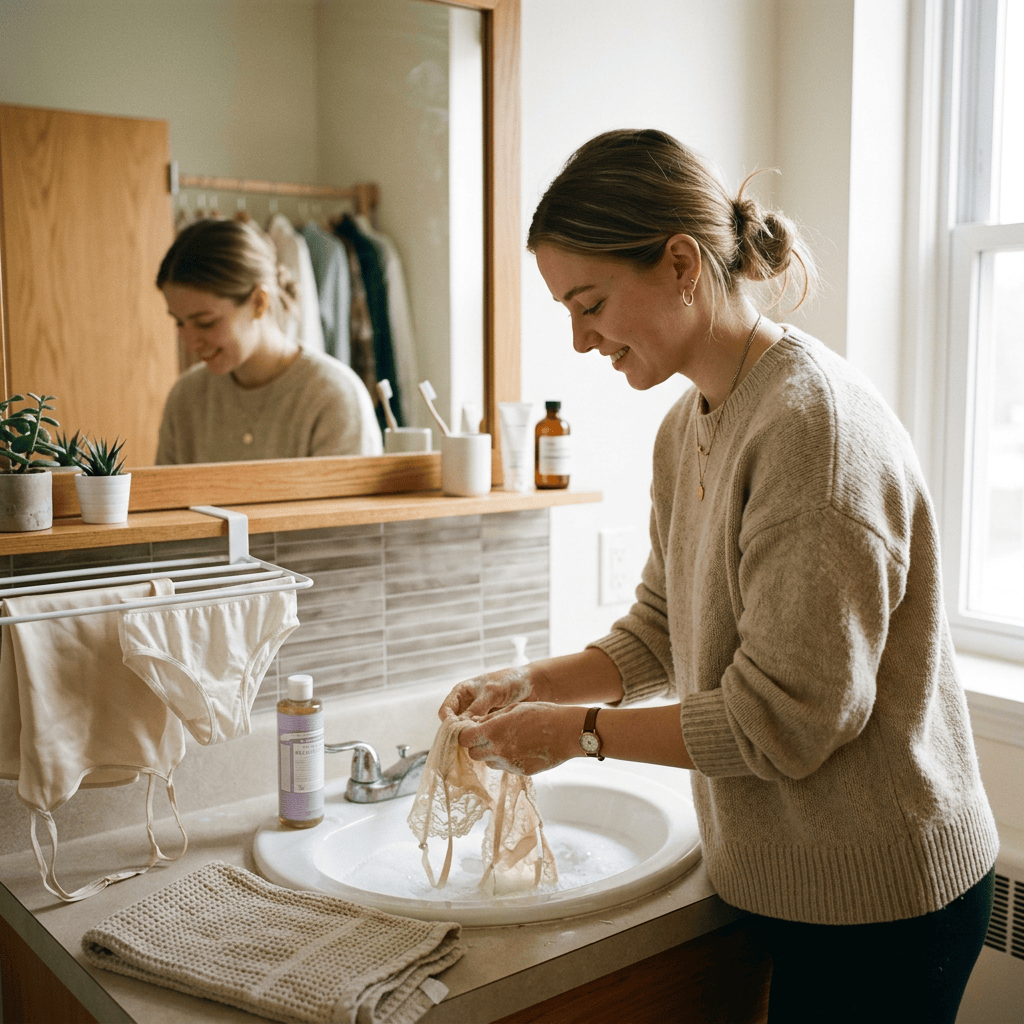
Hand-washing can greatly extend the life of bras, lace, delicate underwear, and clothing with fragile elastic.
- Fill a clean sink or basin with cool water.
- Add a very small amount of gentle detergent.
- Place the items in the water and gently move them around.
- Let them soak briefly.
- Do not scrub, twist, or wring them.
- Rinse thoroughly with cool water.
- Press out excess water gently using a clean towel.
- Reshape the garment.
- Lay flat or hang to air-dry.
Never place underwire bras, delicate lace, or fragile elastic in a hot dryer.
When hand-washing is not realistic, use a zippered mesh bag, cold water, and a gentle machine cycle, then air-dry.
Static, Wrinkles and Last-Minute Fixes
The Real-Wood Static Trick
Static cling is one of the most irritating parts of laundry.
Touch or brush the staticky fabric against a real-wood surface—even a painted wooden door. In my experience, the static usually disappears immediately.
When real wood is unavailable or the static is especially stubborn, use Static Guard.
Wrinkle Release Spray
A wrinkle-release spray is extremely useful in a dorm where there may be no room for an ironing board.
Grandma’s Secret Wrinkle Releaser and Fabric Refresher can help smooth everyday clothing, refresh fabric, and make an outfit look more presentable quickly.
A full ironing and steaming guide deserves its own guide, so I will post that up soon. For ordinary college life, hanging clothes promptly and keeping wrinkle-release spray nearby will solve many problems.
Fabric Basics Every College Student Should Know
The material on the label affects comfort, breathability, durability, and how the garment should be washed.
Cotton
Cotton is breathable, comfortable, absorbent, and practical for everyday clothing. It can shrink under high heat, so cold washing and moderate drying are helpful.
Linen
Linen is excellent in hot weather because it breathes well, but it wrinkles easily.
Wool and Cashmere
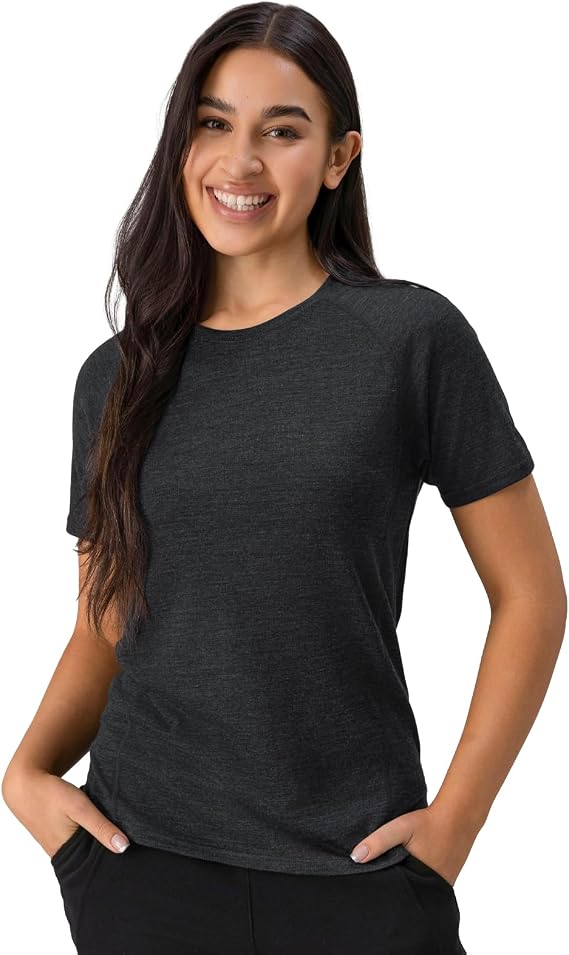
Wool and cashmere are warm, comfortable, and worth caring for properly. Avoid hot water, rough washing, and high dryer heat unless the care label specifically permits them.
Rayon, Viscose and Bamboo-Derived Fabrics
These fabrics can feel soft, cool, and comfortable, but some require gentle washing or air-drying. Read the care label.
Polyester
Polyester is durable, inexpensive, quick-drying, and easy to maintain. It can work well in colder climates or in technical athletic clothing.
However, cheap, densely woven polyester can feel uncomfortable and unbreathable in hot climates. It traps heat and moisture more easily, which is why it can leave you with visibly sweaty underarms even when the outfit looked fine when you put it on.
Do not be the person standing in class with dark sweat patches because the fabric could not breathe. In hot weather, choose cotton, linen, rayon, bamboo-derived fabrics, or other lighter materials whenever possible.
Pay attention to fabric content instead of buying something only because it looks good in an online photo. Better fabric often feels more comfortable, lasts longer, and makes it easier to look put together without constantly replacing clothing.
Things Nobody Tells You About College Laundry
- More detergent does not mean cleaner clothes.
- A stain can look gone while wet and return after drying.
- Dryer heat can make stains harder to remove.
- New bright clothes can bleed into an entire load.
- Towels may lose absorbency when regularly washed with fabric softener.
- Dryer sheets and hair catchers may stick together.
- Wool dryer balls and dryer sheets can work well together.
- Real wood can remove static cling immediately.
- Bras and delicate elastic are easily damaged by dryer heat.
- Shared machines may contain residue from previous users.
- Wet laundry develops odors quickly when forgotten.
- The lint screen needs cleaning before every dryer load.
- Cheap fabric often requires more effort while wearing worse over time.
- Laundry becomes much easier when every supply stays together in one bag.
College Laundry Shopping Checklist
Core Supplies
- Backpack laundry hamper
- Cold-water detergent
- Stain pretreatment
- Emergency stain wipes
- Wool dryer balls
- Dryer sheets
- Mesh laundry bags
Useful Extras
- Oxygen cleaner
- Hair catcher
- Static Guard
- Lemon essential oil
- Wrinkle-release spray
- Gentle detergent for hand-washing
- Scent beads or fabric softener, if desired
Not an Everyday Essential
Final Thoughts

Laundry is not complicated, but the small details matter.
Cold water, prompt stain treatment, correct detergent amounts, lower dryer heat, and a few well-chosen products can prevent most common disasters. The goal is not to build an enormous collection of supplies. It is to create one simple system that protects your clothes, fits inside your laundry bag, and makes the entire chore easier.
Learning through a ruined shirt, shrunken sweater, pink towel load, or permanent mustard stain genuinely sucks. It is much better to learn the rules from someone who cares enough to tell you before it happens.
 Life Tips With Love ♥